

The Connection Between Application Modernization and Business Agility
Legacy applications, often built on outdated technology, can be slow and tough to change. They’re usually monolithic, meaning even small tweaks can require a lot of time and effort. This lack of flexibility can make it hard for a business to quickly respond to market shifts or innovate to meet customer needs.
On the flip side, modernized applications use the latest tech, like microservices, cloud computing, and containerization. Investing in Application Modernization break applications down into smaller, independent pieces that can be developed, deployed, and scaled on their own. This modular approach not only speeds up the development process but also makes it easier to roll out new features, fix issues, and optimize performance without causing a ripple effect throughout the entire system.
Take, for example, a retail company using an outdated e-commerce platform. They might struggle to roll out new features during peak shopping seasons, leading to missed sales. But by modernizing their platform to a microservices-based architecture, they can quickly update and scale key parts, like the checkout process or inventory management, ensuring a smooth and responsive experience for customers.
Key Benefits of Application Modernization for Agility
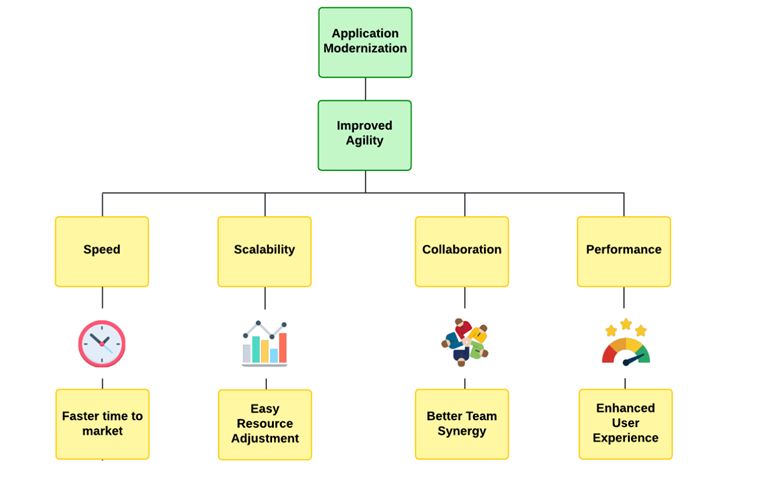
When it comes to staying competitive, business agility is key. Modernizing your applications can unlock a range of benefits that help your business move faster, adapt better, and work smarter. Let’s break down some of the biggest perks of application modernization when it comes to boosting agility.
Faster Time-to-Market
One of the biggest advantages of modernizing your applications is getting new products and features to market faster. Legacy systems often slow things down with long development cycles and cumbersome processes. But when you modernize, especially by adopting microservices or moving to the cloud, you streamline everything. This means your teams can develop, test, and deploy updates or new features much quicker, giving you a competitive edge and allowing you to respond to customer needs in real-time.
Improved Scalability
As your business grows, so does the need to handle more data, users, and transactions. With legacy systems, scaling up can be a headache, often requiring significant time, money, and effort. Modernized applications, on the other hand, are built with scalability in mind. Whether you’re dealing with a sudden spike in traffic or planning for long-term growth, modern architectures like cloud-based solutions allow you to scale up (or down) seamlessly. This flexibility means you can meet demand without missing a beat or breaking the bank.
Enhanced Collaboration
Collaboration is crucial in today’s interconnected work environment. Modernizing your applications often involves integrating tools and platforms that make it easier for teams to work together, no matter where they are. For instance, adopting cloud-based collaboration tools means that your teams can access, share, and work on the same data and documents in real-time, leading to faster decision-making and a more cohesive workflow. This boost in collaboration not only improves efficiency but also helps break down silos, fostering a culture of innovation and teamwork.
Optimized Performance and Reliability
Nobody likes a slow or unreliable application—whether it’s your team using it internally or your customers interacting with it. Modernizing your applications can drastically improve performance and reliability. By moving away from outdated, monolithic systems and embracing newer, more efficient technologies, you can ensure that your applications run smoothly and without interruptions. This means fewer downtimes, quicker load times, and a better overall user experience. Plus, with modern infrastructure, you can take advantage of automatic updates and patches, keeping your systems secure and up to date with minimal effort.
Real-World Examples of Businesses That Improved Agility Through Modernization
Let’s look at a couple of real-world stories where businesses transformed their agility through application modernization. These examples show how modernization isn’t just a tech upgrade—it’s a game-changer that can make all the difference in a competitive market.
Capital One: A Banking Giant’s Journey to the Cloud
Capital One, one of the largest banks in the U.S., knew they needed to do something big to stay ahead in the fast-paced financial industry. Their existing infrastructure was reliable but starting to show its age, especially as the demand for digital services grew. So, they made a bold move—they decided to modernize their entire technology stack by moving to the cloud.
This wasn’t just about adopting new technology; it was about rethinking how they did business. By moving to the cloud, Capital One could quickly roll out new features, like their AI-powered fraud detection and real-time transaction alerts. No longer tied down by the limitations of legacy systems, they could innovate faster than ever before.
But the real magic happened when they saw the impact on their agility. With their modernized infrastructure, they could respond to market changes almost instantly. For example, when the COVID-19 pandemic hit, Capital One was able to rapidly implement new digital banking services, allowing them to better serve their customers when in-person banking was no longer an option. This agility wasn’t just good for business; it strengthened customer trust and loyalty, setting them apart from competitors still struggling with older systems.
Netflix: Scaling Up to Meet Worldwide Demand
Remember when Netflix was just a DVD rental service? It’s hard to imagine now, but back in the early 2000s, Netflix was facing a huge challenge: how to transition from DVDs to streaming while keeping up with their growing global audience. Their original system wasn’t built to handle the kind of traffic they were starting to see, and it was clear that something had to change.
So, Netflix decided to completely modernize their applications by moving to a microservices architecture hosted on the cloud. This was no small task, but it paid off big time. With their new setup, Netflix could handle massive spikes in traffic—like when they released a new season of a popular show—without breaking a sweat. The microservices approach allowed them to update and scale different parts of their system independently, which was crucial for keeping their streaming service fast and reliable.
But the story doesn’t end there. As Netflix expanded globally, they faced new challenges, like localizing content for different regions and providing the same high-quality streaming experience across various devices. Thanks to their modernized architecture, they could quickly adapt and scale to meet these challenges, ensuring a smooth user experience for millions of viewers around the world. Today, Netflix is a prime example of how modernization can drive agility, helping a company not just survive but thrive in a rapidly changing industry.
Conclusion: Embracing Application Modernization for a More Agile Future
Businesses that can quickly adapt to new challenges, seize opportunities, and deliver what their customers want are the ones that thrive. Application modernization is a key driver of this agility, transforming outdated systems into powerful, flexible tools that support growth and innovation.
Whether it’s speeding up your time-to-market, scaling effortlessly as your business grows, enhancing collaboration across teams, or optimizing performance to keep up with customer demands, modernization offers a clear path to a more agile future.
